Latest Post

10 Things to Remember to Craft A Sales Letter That Brings Results

10 Things to Remember to Craft A Sales Letter That Brings Results

Image source
Image source
A sales letter is a direct mail that persuades readers to buy a specific product or service. But if you look at its role in one’s business, it is more than just a piece of paper. It is even beyond selling and persuading. It is what best-selling author and marketer Seth Godin means with his line:
“Connect, create meaning, make a difference, matter, be missed.”
In fact, Scot Ober and Amy Newman, authors of the book Communication in Business, consider sales as the heart of most business, and individual letters and form letters are the means to attract prospective customers. Hence, here is a 10-point comprehensive guide to writing engaging documents and letters that accelerate sales and produce results.
10. Establish a central selling theme.
This is the Unique Selling Point (USP) of your product or service. Entrepreneur.com stresses that “unless you can pinpoint what makes your business unique in a world of homogeneous competitors, you cannot target your sales efforts successfully.” This means you have to emphasize in your letter what makes your product or service different from those of the competitors. You can discover the USP by understanding what customers want (do not limit it to price), what motivates your customer’s behavior and buying decision, and the real reason why your customer wants your product or service instead of the competitor’s. The result of this market analysis should be emphasized in your sales letter.
To deliver this central selling theme or USP, you have to create an attention getter especially if it is an unsolicited letter. However, this attention getter should be related to your products and virtues, introduce the central selling feature, address the customer’s needs, sound interesting, original and brief. Some of the different types of an attention getter are:
  • A solution to problem    –    A wallet for the busy traveler!
  • A bargain                             –    Quality traveler’s wallet (with free coin purse) for only $50!
  • A proverb                            –    A penny saved is a penny earned.
  • A news announcement   –    The number of airplane thieves is rising…
  • A quote from a famous person – “Innovation distinguishes between a leader and a follower”–Steve Jobs. The Institute of Cray Leadership is launching a new management program…
  • A what-if opening             –    What if one day you lose everything have?
  • A question                           –     Why is everyone getting a mutual fund?
  • A split sentence                 –     You should see… that insurance is not about paying the insurance company, it is investing for your loved ones, for your future.

9. Know your audience.
Image source
Image source
The sales letter is not about the product or service you are offering. It is about showing why the product or service addresses the need or solves the problem of your target customer. In a Forbes article by Mark Evans, it is stressed that at some points, the target audience can be easily defined. For example, if you are selling an accounting software, then this is for those who like organizing the finances. So, businesses need to identify the different types of buyers to be exact with their target audience. “One of the best ways to make this happen is looking at who actually makes or influences the buying decision. From there, you look at what their needs or problems, what they’re trying to achieve, how they can be successful, and their budgets.”
Therefore, the results of fact-gathering will impact how the product should be pitched “so a prospect can be pushed down the sales funnel. By clearly identifying target audiences, it becomes easier to capture someone’s attention because their needs and goals are front and center.”
Here are Customer Profile worksheets that can help you learn more about your prospects:
8. Keep your design neat and simple.
Image source
Image source
In its blog, printing company PsPrint shares five ways to make a sales letter engaging physically:
  • Print a headline or a question bold and big on the envelope and include a mini-call to action: “Look inside to see how to get yours!”
  • Craft a design that gets attention, and make sure it moves emotions with imagery “and use humor, fear, sarcasm, confidence, stability or another emotion to drive your point home.” The use of shapes and colors or a simple image can catch your customers’ eyes.
  • Personalize your sales letters as much as possible. You may handwrite your sales letter envelopes to ensure the maximum number of opening customers.
  • “Print your sales letter on professional envelope paper such as 70-pound white woven paper stock or premium 24-pound synergy paper stock, which feels good to hold and inspires customers to open your sales letter.”
7. Use the inductive outline for the structure. 
The fundamentals of the selling procedure are:
– getting the prospect’s attention
– introducing the product / service in an interesting manner
– presenting convincing evidence
– encouraging action
Meanwhile, the US-based National Business Association has a more elaborate outline:
  • Headlines – These are supposed to capture readers’ interest and emotions
  • Greeting – This is the salutation that starts with a “Dear Target Market Name”, then a date, and your geographic location.
  • Introduction – “This is section where you reiterate the details of a particular problem suffered by your target market, empathize with those who have a similar problem, outline why it’s important to seek a solution, and begin to drop hints that you’ve got the solution to this problem.”
  • Your story and credentials – Elaborate your background and credentials that make you qualified to sell this product or service.
  • Product introduction – This contains the benefits of the product/service.
  • Bullet points – Bullets are used to organize the details and make the paper easier to navigate.
  • Testimonials – These make the social proof of your credibility.
  • Product details/benefits – The details of all of the specific components of your product.
  • Your offer/bonuses – These should be directly related to the product and should make readers feel the enhanced value.
  • Guarantee – This section fulfills the need of the customer to feel safe about your offer.
  • Price Justification – Compare your pricing to other products/services that you sell, or to items your reader might use regularly. Your goal here is to make the price a non-issue for the reader by reminding her how much continuing to deal with this problem is costing her.
  • Final call to action
  • Closing and postcripts
6. Use vivid, objective, ethical language.
Authors Ober and Newman encourage the use of action verbs when discussing the products’ features and benefits. Take a look at their examples:
  • NOT: The ski lodge isn’t in one of those crowded resort areas
  • BUT: The private ski lodge sits on the snow-capped peaks of the Canadian Rocky Mountains.
  • NOT: A serving of our baked potato chips doesn’t have high calories like the original chips.
  • BUT: Our baked potato chips have 140 calories per serving–40% less than the original chips
They add that simply describing the product great is not enough. There should be evidence justifying your description of it. However, the authors stress that superlatives and too many strong adjectives should be avoided. The sources of the claims should be clear and acknowledged properly too:
  • NOT: At $795, the Sherwood moped is the best buy on the market.
  • BUT: The May issue of Independent Consumer rated the $795 Sherwood moped the year’s best buy.
  • NOT: Everyone enjoys the convenience of our Bread Baker.
  • BUT: Our Bread Baker comes with one feature we don’t think you’ll ever use: a 30-day, no-questions-asked return policy.
Additional copywriting tips:
Be cohesive. Ideas should flow in a logical and smooth manner to avoid distracting the audience. One sentence should spring from the previous one. Sudden change of thoughts might make readers forget what you are offering.
Be action-oriented. Do not stop at simply describing the product. Do not make it still for a long time. Make it more by using more verbs and adverbs that will help readers realize why the product is beneficial and worth purchasing for them.
5. Link the product and the recipient
Image source
Image source
The letter should stress the relationship between the product and the recipient, especially in the opening line. Here are some examples from Ober and Newman’s book:
  • Technique: Thought-provoking
  • Example: Most of what we had to say about business this morning was unprintable.
  • Item Promoted: An early-morning television news program
  • Technique: Unusual fact
  • Example: If your family is typical, you will wash one ton of laundry this year.
  • Item Promoted: A laundry detergent
  • Technique: Direct challenge
  • Example: Drop the enclosed Pointer pen on the floor, writing tip first, and then sign your name with it.
  • Item Promoted: A no-blot ballpoint pen
Marketing professional Jordyn Rickard, in her article for Duct Tape Marketing’s blog, should balance the emotional connection and the intellectual connection of the sales pitch and its target audience. The emotional connection refers to conveying your passion into words. Thus, it is important to understand what makes your client thrive on a day to day basis. Meanwhile, intellectual connection is also necessary because “all business-minded individuals and consumers operate from a standpoint of validation. Everything they do has to make sense – from a financial standpoint to a moral standpoint. Take this opportunity to tell them why they need you. Why your product is the end all solution to fill the void.”
 4. Present the price in small units.
According to Ober and Newman, if the price is the central selling theme, introduce it right away and emphasize it often. If it isn’t, it can be mentioned right after all the benefits have been discussed. For example, you can write “Yet surprisingly, these benefits are all yours to enjoy for the modest fee of just $35 a year.”
Marketing professional Amy Harrison, in her blog, shares three ways on how to mention price in a sales letter:
1. Comparative Pricing: You can compare your product to something which creates similar results but is more expensive.
2. Offer A Payment Plan: If applicable, you might decide to offer a payment plan to make your product not only more affordable, but to be able to talk about a price that is easier for your customer to digest.
3. Profit Possibility: If you are selling something that your customers can use to make more sales, show them how many sales they’d need to make using your product before it pays for itself.
3. End the letter with a motivating call to action.
Image source
Image source
For Ober and Newman, stating the specific request for action is encouraged when the goal is to make an actual sale, but for high-end items, the objective is to “get the reader take a small step toward purchasing, such as visiting a dealership for a test drive, calling for more information, or asking a sales representative to follow up.
You have to avoid sounding hesitant like “If you want to save money…” or “I hope you agree that this product will save you time…” More importantly, you need to make sure readers will get something from the sentence:
  • NOT: Hurry! Hurry! Hurry! These sale prices won’t be in effect long.
  • BUT: Call before September 30 to take advantage of our lowest prices of the year.
  • NOT: If you agree that this ice cream maker will make your summers more enjoyable, you can place your order by telephone.
  • BUT: To use your Jiffy Ice-Cream Maker during the upcoming July 4 weekend, simply call our toll-free number today.
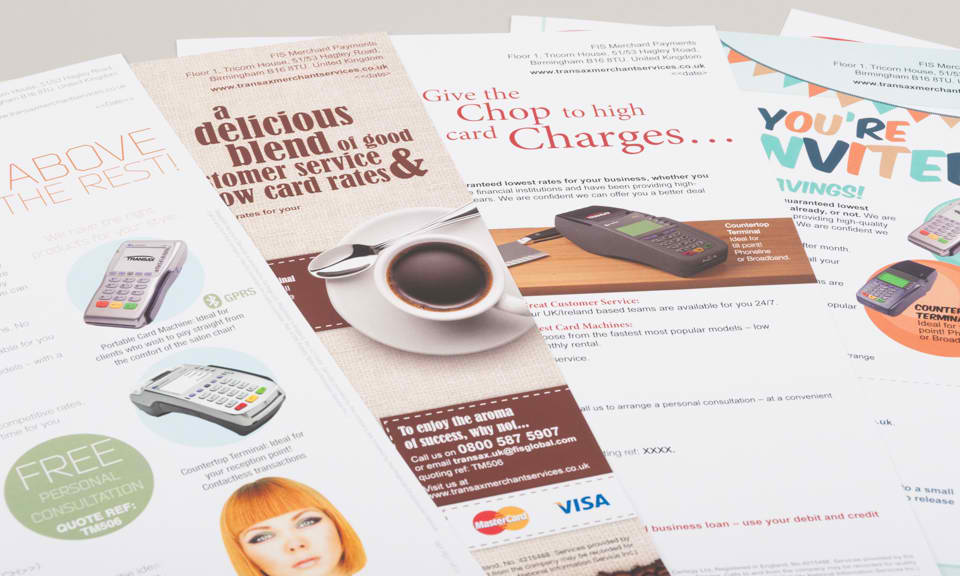
Here is a sample sales letter from businessletterguru.com:
 Jewelry So Exclusive, It Can Only Be For You.
Dear Ms Susie:Going to a party and looking for that perfect set of earrings to set off that beautiful dress? Or are you searching for the right necklace to go with those earrings?
This letter is being sent to a select group of stylish, elegant people who need a little extra from their jewelry. We understand that you need to move in society circles where it‘s just not what you wear, but what you wear it with.
Allow us to introduce our new store in Petronas Square, exclusively opened for you. We specialise in customised diamond, gold and platinum jewelry specially crafted to suit your style.
We work with accomplished craftsmen that use state of the art, modern machines which enhance the clarity of our jewelry, and give them an award winning style. And, you can use the experience of our artisans to create customized jewelry that‘s just right for you.
What makes our jewelry so special? 
  • Our in-house expert artisans create a one-of-a-kind design, so exclusive that it is uniquely yours.
  • We source the best gemstones from around the world, giving you an unmatched range and selection.
  • If you desire, you can select from our range of finest gemstones, and we will customize them according to your directions, at no extra cost.
Our jewelry has been featured in:
Forbes.com
Vogue
America‘s Next Top Model
We are enclosing a Jewel Card designed just for you, as part of our global customer Loyalty program for exclusive Customers.
Our diamonds await the pleasure of looking even more beautiful with you.
Respectfully,
XYZ
P.S
We invite you to get a diamond necklace, our compliments. All you need to do is to visit our store within two weeks.
Please find our location details in the enclosed card.
2. Make a follow up.
Surprise! Did you think this is all about selling? Well, following up on the customer who just received your sales letter remains an important part of the selling process.
Howard Olsen, founder and president of High Output Training Systems, shares tips on how to write a follow up letter:
  • Choose sending an addressed, stamped and delivered post note instead of an email.
  • Send your letter promptly after the meeting to re-establish your presence and your commitment to offer the opportunity to the recipient.
  • Keep it brief, and reinforce the connection you made with the recipient.
Here’s his example:
Dear {Prospect’s Name},
I just wanted to drop you a short note to thank you for taking time out and sharing a few moments with me yesterday.
I found the information we exchanged very intriguing and I come away from our meeting feeling that there could be a nice fit between us.
I’m looking forward to {insert your follow up action here} and to the prospect of a mutually beneficial relationship with you and  {prospects firm}  and to opportunities the future may bring.   I hope also that you’ll feel free to call me with any questions, challenges or problems I may be able to help you or your associates work out.
Sincerely,
{your hand written signature}
Your Name

1. Send A Thank-You Note
Image source
Image source
So your sales letter and follow-up letter sealed a deal.
Is that it?
Send a thank-you note. More than a possible business in the future, a thank-you note will keep your recently successful business with the recipient sincere. If you also know throughout the process that you did not just gain financial reward but emotional growth, competence, and skills, the other party deserves to know that he played a big part to your career.
John Muscarello of Start Networking Today presents a great pointer for writing a professional thank-you letter, and it is called G-R-E-A-T.
Grateful For Their Time
Reference: What Did You Learn
Explanation: Why You Sent A Book (or gift)–if you gave one
Action:  Next Steps
  • If you talked about working together or a future call briefly talk about what the next steps will be.
  • If they gave you advice, follow up with them and let them know your results.  People love to hear when their advice works.  Actually taking action and following their advice will set you apart from all the other people they talk to.
  • They are ten times more likely to give you additional advice later on if you they know you really use their advice.
Thanks:  Always End With Saying Thank You


Please share this with others if you feel it's helpful.
 

How to Write A Cover Letter and A Follow-up Letter, and Create A Winning Portfolio

How to Write A Cover Letter and A Follow-up Letter, and Create A Winning Portfolio

Image source
Image source
A cover letter is like the icing of a cake or a movie poster.
Basically, it aims to tease potential employers and to give them an engaging reason to read through your resume. Remember that there are millions of job seekers out there, and to catch an employer’s eyes is a critical step in surviving a highly competitive field.
The cover letter is not merely a summary or mirror of your resume, but an opportunity to build connection with your potential employer by personalizing the letter and revealing your style and tone in communicating.
Aside from an attractive cover letter and a solid resume, applicants go through the process of waiting, which is quite a luxury nowadays for those who urgently need jobs. Applicants can send follow-up letters to companies they are applying for, but they must do so with utmost courtesy. Sometimes, accompanying the cover letter and resume is a portfolio especially for industries that require heavy creative and technical work, like architecture, graphic design, and writing.
This guide will look into the steps, techniques, and tricks in coming up with an appealing yet professional:
  • cover letter
  • follow-up letters
  • portfolio
What is A Cover Letter
According to Yale College, a cover letter serves as a personal introduction to a prospective employer showing why you are interested in the position and the organization and justifying why you qualify for the position. The letter should match what the job description is saying by emphasizing two or three strongest reasons why you are a good candidate for the role.
How to Create An Engaging Cover Letter: The Characteristics
Length. The Harvard Law School website states that a cover letter should be one page only. It should have four to five paragraphs, with a font size of 11 or 12 and margins at 1-inch on all sides
Paper Quality and Size. The Adams Cover Letter Almanac stresses that the standard size of a cover letter should be 8 1/2-by-11 inch since other papers beyond this measurement might get lost in an employer’s file cabinet. The regular office papers may work for most positions, but executives and top-level positions are expected to deliver more expensive stationery papers, such as ivory laid.
Tone. Accoridng to Harvard, the cover letter should be treated like a “one-sided interview,” like a conversation about work with a colleague. The tone of the cover letter remains professional but gives a glimpse of your individuality. It reveals how you speak or how you convey your desire or thoughts in a formal occasion.
The Structure of A Typical Cover Letter
Image source
Image source
Address. The return address and contact number at the top right-hand corner should appear without your name. It should also avoid abbreviations. The date can be placed two lines beneath the address and should not be abbreviated.
Salutation. Using “To Whom It May Concern” is not encouraged for applicants. One is advised by experts to find out the name and position of the addressee, and confirm these details. Placed two lines beneath the address/date, the salutation can start with “Dear Mr.” or “Dear. Ms.” followed with the person’s last name and a colon.
For advertisements with no enough information and when all efforts to find out the name fail, you can use “Dear Hiring Manager,” “Dear Hiring Coordinator,” or simply “Good Morning.”
First Paragraph. Based on the book Business Communication: In Person, In Print, Online by Amy Newman and Scot Ober, the opening paragraph must be straightforward as employers expect only quality applications for the position. Hence, it has to state:
  1. the reason for your letter
  2. the position you are applying for
  3. how you learned about the opening
The authors note that you can style your first few sentences based on your industry. For example, restrained expressions are for conservative industries, such as financial services, and something imaginative for creative industries like advertising and public relations.
Take a look at the book’s example:
Dear Ms. Diaz,
For two years, I’ve been hoping Young and Rubicam would visit the Fullerton campus, so I was excited to see the summer position posting for Public Relations Assistant. From my PR coursework and PR experience, I’m confident that I have the strong written and oral communication skills you require for the position.
As you can see, this is personalized but still professional and has all the necessary elements of a cover letter’s introduction.
Body Paragraphs. The Harvard site claims that these paragraphs should establish the work experiences that directly match the requirements the position is requiring. It should explain “your background and includes why you are seeking work with this particular employer.” It has to clearly show why your skills meet the company’s needs, and make the connections very specific.
To deliver specific details, Newman and Ober wrote that an applicant can give an example of that connection. Such example should manifest modest confidence and not a sales approach. Here are some of their examples:
Not: As stated on my resume, I sometimes went on sales calls.
But: Once, I went on a sales call with the president of Scholastic, Inc.’s Education division, and we closed a $150,000 deal—the largest for the Ugo software product. From observing the sales manager, I learned…
Not: I took a class in business communication.
But: The communication strategies I learned in my business communication class will help me resolve customer issues as a customer service representative at Allegheny Industries.
If you are to come up with two body paragraphs, the Cover Letter Alamanac suggests the following structure:
Second Paragraph – Mention what you want to contribute to the company and how you can be an asset with your qualifications. You can also discuss your skills and how they go with the job requirements.
Example: In addition to my strong background in mathematics, I also offer significant business experience, having worked in a data processing firm, a bookstore, and a restaurant. I am sure that my courses in statistics and computer programming would prove particularly useful in the position of Trainee.
Third Paragraph – Explain why you choose the company. You can touch on what you know about it (your research effort) and how familiar you are with the industry. Expressing your enthusiasm will help make your cover letter more appealing.
Example: I am attracted to City Bank by your recent rapid growth and the superior reputation of your economic research department. After studying the different commercial banks, I have concluded that City Bank will be in a strong competitive position to benefit from upcoming changes in the industry, such as the phasing out of Regulation Q.
In essence, after reading the body paragraphs, the employer should realize what the applicant can bring to the position and to the company.
Closing Paragraph. This is where you are supposed to thank the employer. Newman and Ober stress that the last paragraph should mention the applicant’s phone number and email address. The applicant is expected to express flexibility in terms of schedule and location. Here are their examples:
After you have reviewed my qualifications, I would appreciate your letting me know when we can meet to discuss my employment with Connecticut Power and Light. I will be in the Hartford area from December 16 through January 4 and could come to your office at any time that is convenient for you.
When you feel like the company is receiving too many resumes, you can take a more proactive approach:
I will call your office next week to see whether we can arrange a meeting to discuss my qualifications for the financial analyst position.
As for the closing line, one can use “sincerely.”
man-writing
Image source
Bonus Tips
Use powerful language. Avoid flooding your letter with too technical or jargon-heavy language to impress the employer. This will be found in your resume and is useful when you become part of the company already. Right now, you are focused on showing your personality as an applicant and desirable employee. You can use action words to make the cover letter “alive.” Here are links to examples of those action words and phrases:
Do not mention your desired salary right away. Unless the advertisement requires it, you can forget your concern about the salary. If it asks for an amount, give a range instead of an exact number. You can also note that it is negotiable.
Avoid sounding informal and focus on being specific and concrete. Accoridng to the Adams Almanac, one should avoid comparisons or cliches like “I am a smart as a whip” or “Your company is known as the creme de la creme of accounting firms.” Avoid using hot pink papers, sharing personal anecdotes such as how you found the advertisement while you were taking your dog for a walk, or talking about shortcomings and how desperate you are for the job. There is a proper venue for those personal details. Keep your cover letter focused on your qualifications and the job’s requirements.
How to Compose Follow-up Letters
There are four types of follow-up correspondence according to the University of Washington:
Thank-You Letter. This is given after a telephone conversation or face-to-face interview. The applicant should express appreciation about the time the company shared with him and the opportunity to further discuss his application.  Here is a sample thank-you letter from Adams:
Dear Ms. Cummings,
It was a pleasure speaking with you today in connection with your search for a Department Manager. I feel my experience and achievements are well within the required qualifications set forth in your detailed job description, and I am confident of my ability to provide your department with the same dedication and capability as I exercise in my present position.
As outlined in my resume, I have extensive administrative and fiscal management experience working with all departments on nonmedical aspects in a health care environment. The challenges associated with the above position are of great interest to me ad I would like the opportunity to meet with you, at your convenience, to further discuss my candidacy for this position.
Yours sincerely,
Chris Smith
Declining Offer Letter. Sometimes, we are hesitant to say “no” to job offers. But we need to respond to them because in the future, your paths may cross and the networking aspect may be beneficial for both of you. Here’s an example from the Adams Alamanac:
Dear Dr.Lodge,
I received your letter dated May 8, offering me the Dental Hygienist position at Angle Dental Center. The compensation and benefits of the position sound very interesting, and I am confident I would enjoy working with your staff.
However, shortly before receiving your letter, I was offered, and accepted, another position. Thank you for your time and consideration of my candidacy.
Best wishes,
Clarissse Lim
Response to A Rejection Letter. Rejections happen because they are teaching you something or leading you closer to the work that is for you. To keep the connection and show sincerity, you can ask the company to consider you for future openings.
Dear Ms. Cooper,
Again, thank you for meeting with me last week to discuss the opportunities for Architects at Edge Firm. I admire the innovative work you and your staff produce and, although I was not chosen for the position, I would like to be considered for upcoming projects.
I have enclosed an additional copy of my resume for your files. Thank you for your attension and I hope to hear from you in the near future.
Sincerely,
Archie Smith
Acceptance Letter. This kind of letter acknowledges and confirms the job offer (the tasks, the payment, and the schedule). This may also attest your solid work ethic.
Dear Sir  Lodge,
I am grateful for the opportunity to be part of such an esteemed department in the agency. I look forward to assuming my post as Geographer, and I am happy to accept the terms of our agreement.
As discussed, my graduation date is set for May 31, and I will be available to begin the following Monday, June 13. I will contact your office early next week to schedule my training session.
Again, thank you. I am very excited to begin.
Sincerely,
Lisa Myers
Here are other examples of cover and follow-up letters:
Steps on How to Create A Portfolio
Your career portfolio is the compilation of your actual works. This may be used by a potential employer to assess the level of your talent, knowledge, and motivation. It is actually a more visual “marketing tool” for your accomplishments and ability. This will give prospective companies ideas on the kind of work you can give them.
The website of the Rivier University in New Hampshire lists the items you may include in your portfolio:
Image source
Image source
Professional Growth and Career Planning 
  • Outstanding work in your major
  • Internship experience
  • Professional memberships
  • Job shadowing/Informational interviews
  • Job descriptions/performance appraisals/work projects
  • Professor evaluations
  • College transcript
Academic or professional awards
  • Communication
  • Speeches/Oral Presentations
  • Papers/written work
  • Debates
  • Articles written/published
  • Business letters/correspondence
Marketing materials
  • Sales/customer service experience
  • Creativity
  • Creative Writing Samples
  • Art Work – drawing, painting, images
  • Photography
  • Theatre experience
Personal experience in another culture
  • Study of another culture
  • Foreign Languages
  • Innovative, imaginative or creative ideas
  • Designing materials or projects
Critical Thinking and Research
  • Numeric work from coursework or professional experience
  • Research papers/projects
  • Case studies
  • Care plans
  • Critical analysis papers
  • Critiques of research articles
Leadership and Teamwork
Image source
Image source
  • Clubs/Campus activities
  • Athletics
  • Academic group projects
  • Leadership roles
  • Community projects
  • Volunteer activities
  • Work or internship roles
  • Active committee member or officer
Social Responsibility
  • Community outreach programs
  • Fundraising events
  • Community service events
  • Multi-cultural awareness projects
  • Campus ministry work
  • Community building
  • Care giving
  • Service Learning
Technical and Scientific 
  • Power Point presentations
  • Excel spreadsheets
  • Access databases
  • Publisher (brochures, flyers)
Computer hardware/software experience
  • Web page design/programming
  • Internet research
  • Laboratory work
  • Scientific reports
  • Clinical skills
Others:
  • Extensive/Unique Travel
  • Special Hobby
  • Participation in a unique group
  • Organizational memberships
  • Licenses/Certifications
  • Study Abroad
  • Life Management Skills – time management, record keeping, managing, budgets or finances, etc.
Resume, Letters, Credentials
  • Resume
  • Letters of recommendation
  • List of references
  • Dean’s List letter
  • Nomination letters
  • Performance evaluation
  • Letter of acceptance into graduate school
  • Letter commending your skills
Image source
Image source
The Florida State University presents a list of specific materials you can add to your portfolio:
Education
  1. Statement of teaching philosophy (1-2 pages)
  2. Teaching honors/awards
  3. Evaluations (e.g., supervisor, student)
  4. Video of your teaching
  5. Evidence of student learning (e.g., graded
  6. exams, assignments [1 good/1 bad])
  7. Classroom innovations (e.g., new technology)
  8. Sample lesson plans
  9. Relevant photographs
The Arts / Performance or Design
  1. Actual work samples or photos of them
  2. Video/audio recording of work
  3. Course descriptions for classes/workshops
  4. List of competencies mastered
Here are links to sample portfolios that can serve as your guide:
Bonus tips: As much as possible, your accomplishments should involve problems and then the solutions you formulated and executed alone or with a team. Keep your portfolio neat and readable. Lastly, make sure that it will bring out your true style, the one they can expect and help you grow.
Please share this with others if you feel it's helpful.
 

The Ultimate Business Proposal Guide: How to Pitch, Propose, and Persuade

The Ultimate Business Proposal Guide: How to Pitch, Propose, and Persuade

Passion, for most successful businessmen, is what drives business.
But passion alone cannot build a business.
It requires a lot from reality: paperwork, budget, workforce, utilities,  marketing, and connections–with business partners, companies, government institutions, and most especially, customers. In every step of the way, a business thrives in the quality of its network, most especially when collaborating with another business or asking people to support you with a new idea or opportunity.
This is not as easy as inviting someone to watch a movie or go to a dinner. It is rigid planning, a process that starts with a business proposal.
Image source
Image source
What is A Business Proposal?
Inc Magazine defines a business proposal as simply “a written document sent to a prospective client in order to obtain a specific job.” It can be solicited (when a customer or prospective partner asks for a proposal) or unsolicited (a sales presentation). The proposal used for highly technical fields consists of dry listings of engineering specifications or process details, but it is “always first and foremost a sales document.”
According to the Rockford University, the essence of a business proposal is how it frames how a business will run in a systematic way based on one’s researching and thinking. This process helps one analyze the details, review facts, and critically examine ideas. It may be time consuming but this avoids costly damages and future errors.
A business proposal consists of narratives, worksheets, and data, but it can be modified based on its purpose, context, or audience or target recipient. The following are the uses of a business proposal according to June Campbell of Nightcats Multimedia Productions in a 4hb.com article:
(1) A business entity has called for tenders or has invited you to submit a RFP (Request for Proposal). In this case, your goal is to be “short listed,” meaning that you will be one of the three or four bidders who is awarded an interview. Your proposal must stand among possibly dozens of submissions.
(2) You have an idea, concept or project that you want to propose to someone with the goal of gaining support, funding or an alliance. In this case, there is no competitive bidding process. However, your proposal must make a favorable impression and must explain all aspects of your proposed concept clearly and quickly. A document that is vaguely written, difficult to understand or that presents more questions than answers will likely be discarded promptly.
The Structure of A Business Proposal
Image source
Image source
A business proposal is composed of two parts according to Inc Magazine: the cover letter and the proposal document. It may also have attachments or appendices, such as charts, graphs, photographs and maps. Sometimes, there are short proposals, known as letter proposals, that merge the details of both parts.
The Cover Letter
It acts as a transmittal document, giving a preview of the proposal “in very abbreviated form,” the bidder’s qualifications, important figures, and desired objectives.
The Proposal Document
Again, the formats of a proposal document vary depending on purpose, audience, and objectives. The following are the basic elements:
* Title Page  This presents your name and your company’s, the receiver of the proposal, and the date of the proposal’s submission.
* Table of Contents – You need this when your company’s proposal is complex and requires formality. This is also helpful when there are different departments of a company that will review the proposal. With a table of contents, each department can easily go to the part they are to study. This page lists the headings of the different parts of the proposal and the topics. Here’s an example from the Rockford University:
Table of Contents
I. Table of Contents …………………………………………. 3
II. Executive Summary…………………………………. 4
III. General Company Description ……………………………….. 5
IV. Products and Services …………………………………. 6
V. Marketing Plan ………………………………………… 7
VI. Operational Plan …………………………………… 16
VII. Management and Organization ……………………………. 21
VIII. Personal Financial Statement ………………………. 22
IX. Startup Expenses and Capitalization …………. 23
X. Financial Plan ……………………………….. 24
XI. Appendices ………………………………………. 27
XII. Refining the Plan ……………………………. 28
* Executive Summary – This part may be included in the cover letter or in the proposal document. Usually, an Executive Summary holds the “fundamentals of the proposed business.” For the Rockford University, these are the answers to these questions: What will your product be? Who will your customers be? Who are the owners? What do you think the future holds for your business and your industry? For example, for a loan application, one should determine the exact amount of the loan, how the funds will be spent, and how it will make your business more profitable.
For some, the Executive Summary can also be the Introduction.
*Introduction – Among the details here are the Company Description and Statement and Background of the Problem. For the Company Description, the page should consist of the Mission Statement (the reason for the company’s being and guiding principles), and Company Goals and Objectives (the desired future of the business)–an example of a goal is to be known as a leader in customer service and gain a loyal customer following. Meanwhile, objectives can be about annual sales targets and evaluation of customer satisfaction and the Business Philosophy centers on what the business means to you.
In addition, you can also briefly describe your target market and your industry (short-term and long-term trends and how the company responds to them). According to the Rock University, another important part of the Introduction is the set of the company’s strengths and core competencies:
  • What factors will make the company succeed?
  • What do you think your major competitive strengths will be?
  • What background experience, skills, and strengths can you bring to the venture?
Also important to note is the legal form of ownership: Sole proprietor, Partnership, Corporation, Limited liability corporation.
When necessary, one should introduce the context or background information of the proposal. Was the proposal requested? What is the history of your involvement in the project? What were the previous solutions?
Terms or phrases can also be defined here to clarify specialized jargon that may confuse outside readers. You are also encouraged to mention the key terms of the recipient if you are responding to a request for proposal (RFP) to show that you are taking the project seriously.
*Statement of the Problem/Issue/Job – This lists the client’s objectives and goals according to the interpretation of the bidder. These details are significant because these will show the client that the bidder is aware of the issue.
Image source
Image source
* Plan of Work – Also known as the Approach, considered as key to winning the job, this part should present the gist of your proposed approach to solve the client’s problem. It is expected to show “unique means, modes of thought, or techniques, why they will solve the problem, and why they are superior to alternatives.” 
The benefits of the solution should be discussed here in a bulleted list. You should support all your claims with evidence to establish credibility and convince the recipient.  One is advised to conduct research on the subject area–to reference related studies, quote experts or knowledgeable figures, use statistics, and cite the sources.
* Methodology – This details the implementation of the Approach. Here’s an example from Bidsketch:
The solution that is recommended for Puffin Media Inc. is to deploy their company on all of the major social media channels; however, there is a major difference in creating social media platforms versus creating a brand you can promote on those platforms.
A marketing campaign must be created utilizing these media channels and creating immediate engagement with your audience. In order for this to be successful, you know how to make sales. Initially, acquire some fans, followers, subscribers, and connections and invite them to join you in particular discussion or attend a specific event.
The purpose of this is not only to promote Puffin Media Inc, but also to solicit feedback from the target audience.
This may also be a Marketing Plan followed by an Operation Plan.
A Marketing Plan, based on Rockford University’s example, should contain market research. It should be specific, complete with data like statistics, numbers, and sources. This is expected as the basis of the “all-important sales projection.” Here is their sample outline:
Economics
Facts about your industry:
• What is the total size of your market? Page 8 of 31
• What percent share of the market will you have? (This is important only if you
think you will be a major factor in the market.)
• Current demand in target market.
• Trends in target market—growth trends, trends in consumer preferences, and
trends in product development.
• Growth potential and opportunity for a business of your size.
• What barriers to entry do you face in entering this market with your new
company? Some typical barriers are:
o  High capital costs
o High production costs
o High marketing costs
o Consumer acceptance and brand recognition
o Training and skills
o Unique technology and patents
o Unions
o Shipping costs
o Tariff barriers and quotas
• And of course, how will you overcome the barriers?
• How could the following affect your company?
o Change in technology
o Change in government regulations
o Change in the economy
o Change in your industry
Product
In the Products and Services section, you described your products and services as you see
them. Now describe them from your customers’ point of view.
  1. Features and Benefits
  2. List all of your major products or services.
  3. For each product or service:
• Describe the most important features. What is special about it?
• Describe the benefits. That is, what will the product do for the customer?
It should also expand on the Product, Competition, Customers, Strategy, and Sales Forecast.
On the other hand, an Operation Plan explains the daily processes of the business, its location, equipment, people, processes,  and surrounding environment. Specifically, these are the Production essentials (such as Quality Control and Product Development), Location, Personnel, Inventory, Suppliers, and Credit Policies.
* Bidder’s Qualifications or Qualifications and Experience – This section focuses on the reasons why you should be dealt with on the basis of qualifications, past history, and successful accomplishment of similar jobs in the past. You can also discuss the exact experiences that qualify you for the implementation of this proposal. Meanwhile, you should introduce the one who will head the project if you are not personally qualified.
When using an outside personnel, according to the University of Richmond – Writing Center, you should attach their resumes especially when they are playing a large role in the project.
Moreover, you can also stress why the reader should be receiving the proposal by answering these questions: How have their past experiences brought them to where they are today? What about the individual, or company, makes you want to propose this project to them? You can mention specific examples of projects of the company that will prove why your proposed project is fitting.
A more elaborate presentation of the Qualifications from the Rockford University identifies the positions and roles of the Management and Organization. In fact, if there is a huge group handling the project, you are encouraged to create an organizational chart showing the management hierarchy. Here, you will determine the key functions and position descriptions. Here’s an example of a list:
• Board of directors
• Management advisory board
• Attorney
• Accountant
• Insurance agent
• Banker
• Consultant or consultants
• Mentors and key advisors
* Schedule and Benchmark – A timeline is necessary to note the dates or frequency the major elements of the job are performed. Inc Magazine stresses that “specific benchmarks can be identified to indicate successful accomplishment of intermediate objectives.” For example, the development of a web page will start in August and that it will be launched for business January next year.
Image source
Image source
* Budget or Expenses and Capitalization – This section, according to the Richmond University, specifies the budget of the whole project or an estimation of what your proposed project will cost. You should consider both the direct and indirect costs. Direct Costs refer to the employee salaries and costs of materials while Indirect Costs are rent or legal fees. You should note that this is a critical part of the document that might convince your reader to accept your project.
Some proposals, based on the Rockford University’s sample, have a financial plan. This is usually for those with complex and lengthy proposals. The financial plan lays out a 12‐month profit and loss projection, a four‐year profit and loss projection (optional), a cash‐flow projection, a projected balance sheet, and a break‐even calculation. Meanwhile, a break-even analysis itemizes the sales volume, at a given price, required to recover total costs. Expressed as a formula, break‐even is:
Break‐Even Sales          =  Fixed Costs
1‐ Variable Costs
* Opposition – The Richmond University makes a good point about acknowledging possible obstacles the proposal may face and that the recipient of the proposal would want to know the problems they have to face. According to Laura Leave, author of Promoting Innovation in the Workplace: The Internal Proposal, you should take a three-step approach to this section: summary, concession, and rebuttal. This means that the potential issue and how it may arise should be explained. Then, you must justify why the benefits of the project can “outweigh any opposition that faces it.”
* Conclusion – The benefits of the proposal are reiterated here. This should tell them what you want them to do, and this is known as call to action in marketing. You can identify a “deadline” in your request and explain why this is an ideal time to convince the readers about what they should comply.
* Appendices – This lists the details and studies used in your document or additional materials that support it. Here’s an example of list from Rockford:
• Brochures and advertising materials
• Industry studies
• Blueprints and plans
• Maps and photos of location
• Magazine or other articles
• Detailed lists of equipment owned or to be purchased
• Copies of leases and contracts
• Letters of support from future customers
• Any other materials needed to support the assumptions in this plan
• Market research studies
• List of assets available as collateral for a loan
The Principles of Persuasion
Image source
Image source
Alice N.T. Reid of the Delaware Technical and Community College, in her article, stresses that the general purpose of any proposal is to persuade the readers to do something and then offers a plan to fill a need.
The Community Tool Box, an educational resource program by the University of Kansas, lists the Principles of Persuasion and here are some of them:
1. Know Your Facts. After gathering substantial research, you must be able to deliver it in “a level-headed, non-condescending, but also not-overly-humble way.”
2. Know Your Audience. Design your arguments specifically for them.
3. Express the similarities between you and your audience. Determine your common values, beliefs, and experiences.
4. Get to the Point. You should be able to deliver your main points concisely because time may be precious for your audience.
5. Maximize the Benefits. Identify those with the greatest appeal to your audience.
6. Call for Action. Make it clear, simple, and feasible.
The last but definitely the most important one is Commitment to the Duty. This will validate the effectiveness of the Business Proposal…and maybe land you a couple of referrals and more business.
Please share this with others if you feel it's helpful.
 

Effective Business Writing: How to Write Letters and Inter-office Documents

Effective Business Writing: How to Write Letters and Inter-office Documents

Imagine the world without language. There would be catastrophe in silence, in cultures, in our surviving and in our sense of being. This is the same with having insufficient communication within a corporate organization or a business. Without communication, there would be no sales, no suggestions, and no solidarity. Hence, today, we will tackle the basics on business writing for office relations:
  • The Anatomy of A Business Letter
  • Different Types of Business Letter: Inter-office Documents
The Anatomy of A Business Letter
Image source
Image source
To deliver a message effectively, the channel should be solid and clear. According to the book Effective Business Communication, by Ronnie A. Bouing, the following are parts of a business letter:
  1. Heading (Letterhead) – This usually displays the name of the institution represented by the author, as well as the corporate name and business address.
  2. Date (Dateline) – This indicates the day when the letter was written, and not when the document was released.
  3. Inside Address – The name, position, business name, and business address of the addressee appear on this part.
  4. Return Address – Your address
  5. Salutation – For the recipient’s name, use Mr. or Ms. and then the last name to show respect. Other salutations are: Ladies, Gentlemen, Dear Sir, and Dear Sir or Madam.
  6. Body – Paragraphs should be brief and straight to the point. The length of the letter depends on the purpose of the letter.
  7. Complimentary Close – This is the part where the author should signal the ending of the letter. Among the suggested closings are: “Very truly yours,” “Very sincerely yours,” and “Very respectfully yours.
  8. Signature Block – Your name and position are on this part.
  9. Reference Initial – Any of the writer, dictator, or encoder of the letter should be mentioned using an acronym, initial or code.
  10. Courtesy Copies – These are the secondary recipients of the letter.
  11. Enclosure Notation – This reminds the recipient about the attachment/s to the letter.
  12. Postcript (PS Notation) – Important details are stressed here, calling the recipient’s attention. This is usually found on a sales or marketing letter.
  13. Through Line – “This part appears in the letter if the sender is a subordinate who writes to a person higher in position than his immediate superior. It is a protocol that communications should pass through channels.”
Notes on Salutation: Syntax Training founder Lynn Gaertner-Johnston shares the following tips when greeting your letter’s recipient:
  1. Use the title Ms. if you are unsure of what the person prefers between Mrs. and Ms.
  2. Use two names in the salutation when there are two recipients, like this:
    Dear Mr. Lodge and Ms. Cooper:  or Dear Maine and Thomas:
  3. Titles Mr., Ms., Mrs., and Dr.  do not have to be spelled out. But do spell out titles like these: “Professor, Dean, Sister, Rabbi, Imam, Senator, Governor, Captain, Admiral, Judge”
  4. If unsure of a person’s gender, you may use the full name rather than a title:
    Dear Lea Swift:  / Dear Ed Green:
  5. Avoid “To whom it may concern.” Instead, choose the job title or a generic greeting:
  6. If you are writing to a company rather than any specific individual, use the company name: Dear Trex Printing:
As for the format of a business letter, the University of Wisconsin – Madison identifies two basic formats for a letter:
  1. The Block Form – All the parts are indented to the left
  2. The Indented Form – The return address, date, closing, and signature of the author are indented to the right and the rest to the left
Below are samples of business letters.
1) Complaint Letter / Personal, no letterhead needed: From Georgia’s Office of Consumer Protection
[Your address]
[Your city, state, zip code]
[Today’s date]
[Name of contact person (if available)]
[Title (if available)]
[Company name]
[Consumer Complaint Division (if there is no contact person)]
[Street address]
[City, state, zip code]
Re: [Account number or other reference to your complaint]
Dear [Contact Person]:
This letter is to [notify you {or} follow up on our conversation of {date}] about a problem I am having with the [name of product or service performed] that I [bought, leased, rented or had repaired] at your [name of location] location on [date].
I am dissatisfied with your [service or product] because [describe problem].  I have already attempted to resolve this problem by [describe attempts and actions taken].  I have enclosed copies of my records.  [Include copies of receipts, canceled checks, contracts, and other relevant documents]
Unfortunately, the problem remains unresolved.  I am hereby requesting that you:  [List specific actions you want (such as: refund, exchange or repair the item)]
1)
2)
3)
Please contact me within [number of days] days to confirm that you will honor my request.  I have prepared a complaint for submission to the proper agencies for investigation.  I will not file the complaint if you resolve the problem within this time period I have indicated.
Thank you for your anticipated assistance in resolving my problem.  Please contact me at [telephone number and/or e-mail address] if you have any questions.
Sincerely,
[Your signature]
[Your name]

Enclosure(s): [List attached document copies]
cc: [Name(s) of anyone to whom you are sending a copy of this letter]

 2) Request Letter: From the Jane Goodall Institute of Canada
Capture
Date 
Your name
The name of your Roots & Shoots group
Your street address
Your town/city, state/province zip/postal code
Name of the person to whom you are sending your letter
Job title of person to whom you are sending the letter
Name of business or organization
Street address
Town/city, state/province zip/postal code
Dear Mr./Ms. __________________ (name of person to whom you are sending the
letter):
My name is ____________________________, and I am writing on behalf of
_________________Roots & Shoots group (your group name). Roots & Shoots is the
education program of the Jane Goodall Institute (www.janegoodall.ca) and a global
network of youth working for positive change.
As Roots & Shoots members, we are trying to make a positive difference through our
actions. We have begun a project to
_________________________________________________________ (describe your project
goals, schedule and methods). Our goal is to make our community a better place for
people, animals and the environment.
In order to complete this project, we need ___________________________(write down a
short list of the equipment or materials you need that the business you are writing to
could donate to you). We would be most grateful if __________________________
(name of business/organization) could ________________ (choose the word that applies:
donate/ lend) any of these items to help us implement our project. If you are interested,
we will keep you informed with regular updates on the progress of our project.
Please contact me at ________________________ (your phone # and/or email address) if
you are able to help. If we don’t hear from you within a week, we will contact you
personally. Thank you for your time and for considering this request. We look forward
to working with you and creating a stronger community.
Sincerely,
(your name signed)
Your name typed

Different Types of Business Letter: Inter-office Documents
Some say that how businesses communicate and deal with their partners and clients reflect their way of handling their own internal communications. This is, according to the Saylor Foundation, a non-profit institution in Washington D.C., organizational communication. It involves “sending and receiving of messages among interrelated individuals within a particular environment or setting to achieve individual and common goals.” The process is strictly anchored on the organization’s context and culture. This can be conducted using mediated channels, face-to-face, or written. Each written internal communication has its purpose, which directs a document’s details, tone, and style. 
Writing An Office Memo
Image source
Image source
An office memo is a widely circulated document in the office conveying a message, a brief report, an announcement, or invitation. The Loyola University – New Orleans points out the parts of a standard memo format.
1) Heading.  This part contains the following elements:
To: (readers’ names and job titles)
From: (your name and job title, and your hand-written initials next to your name)
Date: (complete, current date)
Subject: (what the memo is about, the main idea of the memo summarized)
2) Opening. This segment should focus on the subject and purpose of the memo. It should clearly answer: What is this memo about? What should people do, learn or realize after reading the memo? For example, an opening sentence can be “To uphold the new company policy on attendance, everyone is advised to check in 15 minutes before the start of the production time.”
3) Summary (optional). Sometimes, when a memo is longer than one page, a summary is placed at the beginning to mention the highlights of the memo. It acts like a longer introduction.
4) Closing.This is the part where the actions or request of the letter should be clearly reiterated. This should mention the necessary steps, relevant dates and deadlines. If there is no request for action, the memo can have a closing thought.  Examples: “I would be glad to meet with you about this on . . . .” ; “Thank you for your attention to this matter.” ; “Please review this information and respond to me by . . . .”.
5) Attachments (optional). If the memo has supporting documents (graphs, lists or tables), this should be mentioned at the end of the memo.
Here are links for sample memos:
Image source
Image source
Writing Goodwill Messages
According to the book Business Communication: In Person, In Print, Online by Amy Newman and Scot Ober, goodwill messages are not actually meant to produce business directly. They are often for building and maintaining relationships. These can be done by phone, but a handwritten note or email can be considered “more thoughtful, more appreciated, and more permanent.” Here are the authors’ guidelines for goodwill messages:
1) Be prompt. Send a goodwill message while the reason is still fresh in the reader’s mind. For example, a welcome to note to a new employee should be given within his or her first few days on the job.
2) Be direct. Give the major idea in the first sentence or two, even for sympathy notes.
3) Be specific. By including a specific situation or anecdote in a compliment note, the intention of the author will be more convincing to the recipient.
4) Be sincere. Write as if you were speaking to the person directly, and avoid flowery or too strong language to keep things more sincere.
5) Be brief. A personal note card or a one-paragraph email is already enough and sincere.
Example of a Recognition Note
Dear Javier,
You did a terrific job on the feasibility study for Barker Associates. Ron called me this morning to tell me it was the most thorough, detailed analysis he had received in years. He also complimented the easy-to-read report format.
I really appreciate your work on this project. You put in a lot of long hours in the past three months, and your dedication has certainly paid off. When Ron has another project in the pipeline, he’ll definitely call us for the job.
Keep up the good work,
Maurice
Example of A Congratulatory Note
Congratulations, Tom, on being elected president of the United Way of Alberta County. I was happy to see the announcement in this morning’s newspaper and to learn of your plans for the upcoming campaign.
Best wishes for a successful fund drive. This important community effort surely deserves everyone’s full support.
Daniel
Writing A Letter to Persuade the Audience
Image source
Image source
Newman and Ober states that persuading someone means motivating him or her to act upon a belief, and that business communication is mostly about persuasion. Sometimes, even a document that aims to inform also intends to ask the reader to accept a perspective and believe in the very information. Meanwhile, for managers, it is their job to persuade others to do their best in their jobs.
The very first step in persuading people is to analyze their behavior, culture, attitude, and even possible reasons for resistance. This way, you can tailor your letter in a way that will capture their approval. For example, if you are a manager and the recipient of your letter is for someone who is ambitious and wants to be promoted, the letter asking the person to take on additional responsibilities must sound like these will help him or her to get a higher-level position in the future.
The three persuasion principles that can be applied in business letter writing are Aristotle’s:
  • Ethos (appeal based on credibility) – Emphasize your background, your character, your authority over a topic, field, or issue
  • Pathos (appeal based on emotion) – Connect with people emotionally through vivid language and dynamic delivery
  • Logos (appeal based on logic) – Present data, solid evidence, and reasoning
Sample of an email presenting an idea
To: Jason Myers
From: Grace Y. Lee
Date: September 17, 2013
Subject: Adding Hot Food Choices to the Menu
Jason,
I have an idea to add hot food items to the buffet. The restaurant has done tremendously as well as a salad bar and deli since its grand opening in 2005, but guest count and revenue have been declining in the past year. If we redesigned the menu to include hot food, Jason’s can benefit in the following ways:
Increase revenue and profit: hot foods are priced higher than cold foods.
Distinguish the cafe from competitors: few other details in the area offer hot foods.
Keep pace with market trends: people want more variety in their food choices.
By adding hot foods, Jason’s can return to last year’s revenue level, I look forward to hearing your reaction when we met on Thursday. At that time, I can provide you with more of my research.
Grace
Writing A Letter to Announce A Bad News
Image source
Image source
An indirect plan, according  Newman and Ober, should be applied when sending a negative message to people who report to you, customers, readers who prefer it, or readers you are not yet familiar with. Here are their guidelines:
  • Make sure the purpose is to establish a common ground with the readers.
  • Compose an introduction that is “neutral, relevant, supportive, interesting, and short.”
  • Give a point of agreement, express appreciation, a sincere compliment, a fact or general principle, or understanding.
  • Transition from the buffer to the reasons that follow.
The Indirect Plan Technique
  1. Subordinate the bad news by putting it in the middle of a paragraph and discussing additional reasons.
  2. Talk about the bad news as a logical outcome of the reasons given.
  3. Deliver the bad news in a positive and impersonal language.
  4. Never apologize.
  5. Make the refusal clear and definite to avoid misunderstanding.
  6. Close on a positive note: Express best wishes, offer a counter-proposal, or suggest other resources.
Writing A Letter to Reject An Idea
Image source
Image source
An example of a bad-news message is the rejection of a proposal. The principle here is to explain the reason for such decision and persuade the audience that the writer’s position is reasonable. Take a look at this example that answers the proposal of Grace above:
To: Grace Lee
From: Jason Myers
Subject: Re Adding Hot Food Choices to the Menu
Dear Grace,
Your idea to include hot food items is a great example of your dedication to the business and your creative thinking. I appreciate your taking the time to consider ways to increase profitability at Jason’s.
For another business, I could see adding hot food items. As you say, these items are higher priced and may result in higher profits. However, for Jason’s, I’m concerned that the change would take us too far away from our mission. The deli/restaurant was built on cold food-items that customers could pick up and eat quickly during their lunch hour. The hot buffer may add a level of complexity to the lunch rush, both to us and to your time-pressed customers.
You’re right that few other deli restaurants in the area offer hot food items. However, the few that do are so close to use–two on our block and one across the street–that I’m not sure we’d achieve the differentiation you usee.
Grace, the reality is, we just lose one of your biggest investors. If this hadn’t been the case, I might view your idea differently. But right now, with this loss and our declining guest count and revenue, we simply don’t have the capital to invest in making this change.
Again, I so appreciate your thinking about how to move Jason’s forward. I’d like to hear any other ideas you have for the business. Jason’s is luck to have you as part of our team!
Best regards,
Jason
Please share this with others if you feel it's helpful.
 

Subordinating conjunctions exercise

Subordinating conjunctions exercise

Complete the following sentences using appropriate subordinating conjunctions.
1. I make it a point to visit the Taj Mahal …………………. I go to Agra.
2. This is the place …………….. I used to stay when I was studying at college.
3. ……………….. you get the first rank, I will buy you a car.
4. ……………….. you work hard, you can’t pass the entrance test.
5. I am leaving tomorrow ………………… or not you give me the permission.
6. He could not get a seat, ……………….. he came early.
7. The players delivered a splendid performance …………………. they had rehearsed well.
8. Parents should give enough attention to children ……………….. they will not feel neglected.
9. He is ………………… dishonest ……………………… no one trusts him.
10. I will note it down ……………… I should forget.
Answers
1. I make it a point to visit the Taj Mahal whenever I go to Agra.
2. This is the place where I used to stay when I was studying at college.
3. If you get the first rank, I will buy you a car.
4. Unless you work hard, you can’t pass the entrance test.
5. I am leaving tomorrow whether or not you give me the permission.
6. He could not get a seat, though he came early.
7. The players delivered a splendid performance as they had rehearsed well.
8. Parents should give enough attention to children so that they will not feel neglected.
9. He is so dishonest that no one trusts him.
10. I will note it down lest I should forget.
Please share this with others if you feel it's helpful.
 

Direct and indirect speech: an overview of the rules

Direct and indirect speech: an overview of the rules

When the reporting verb is in the past tense, all present tenses in the direct speech will change into the corresponding past tenses.
For example, the simple present will become simple past.
He said, ‘I want to go.’
He said that he wanted to go.
The present continuous will become the past continuous.
She said, ‘I am coming.’
She said that she was coming.
The present perfect will become the past perfect.
He said, ‘I have finished.’
He said that he had finished.
If the reporting verb is in the present tense, the tenses in the direct speech do not change.
He says, ‘He is leaving.’
He says that he is leaving.
When we report questions, the indirect speech is introduced by verbs such as asked, inquired etc.
He said to me, ‘What are you doing there?’
He asked me what I was doing there.
To report an Yes/No question, we use if or whether.
He said to me, ‘Are you interested?’
He asked me if I was interested.
He said to them, ‘Will you listen to such a man?’
He asked them whether they would listen to such a man.
When we report commands and requests, the indirect speech is introduced by verbs expressing a command or request. Examples are: ordered, requested, commanded, shouted etc.
The master said to the servant, ‘Go away.’
The master ordered the servant to go away.
He said to them, ‘Please wait here till I return.’
He requested them to wait there till he returned.
Please share this with others if you feel it's helpful.
 

The same word used as different part of speech

The same word used as different part of speech

Here is a list of some of the most important words which belong to different parts of speech. Note that it is the function or use which determines which part of speech a particular word belongs to.
About
About can be used as an adverb or a preposition. As an adverb, about modifies the verb. As a preposition, it connects a noun or pronoun with some other word in the sentence. Study the examples given below.
They wandered about the town. (Here the word about modifies the verb wandered and hence it acts as an adverb.)
There was something affable about him. (Preposition)
Above
The word above can be used as an adverb, a preposition, an adjective or a noun.
Study the examples given below.
The heavens are above. (Adverb)
The moral code of conduct is above the civil code of conduct. (Preposition)
Read the sentence given above. (Adjective)
Our blessings come from above. (Noun)
After
The word after can be used as an adverb, a preposition, an adjective and a conjunction.
He left soon after. (Adverb)
She takes after her mother. (Preposition)
I went to bed after I had dinner. (Conjunction)
All
All children need love. (Adjective)
She lives all alone in a small hut. (Adverb)
She lost all she owned. (Noun)
Any
Have you got any pens? (Adjective)
Is he any better? (Adverb)
‘Did you get any strawberries?’ ‘There wasn’t any left.’ (Pronoun)
As
We walked as fast as we could. (Adverb)
As he was late, we went without him. (Conjunction)
She likes the same color as I do. (Relative pronoun)
Please share this with others if you feel it's helpful.
 
 
Support : Creating Website | Don-Rhobett Template | Mas Template
Copyright © 2015. Grammar - All Rights Reserved
Privacy Policy | Published by Don-Rhobett
Proudly powered by Blogger